🚨🇻🇦🔥 BREAKING TV DRAMA — JUST 25 MINUTES AGO IN ROME, ITALY: POPE LEO XIV REPORTEDLY FIRED BACK AT A HOST WHO ACCUSED RELIGIOUS LEADERS OF EXPLOITING THE 2026 MIDTERM ELECTIONS FOR ATTENTION — AND MOMENTS LATER, THE HOLY FATHER ALLEGEDLY STOOD UP AND WALKED OUT WHILE THE CAMERAS WERE STILL ROLLING! 😱💥
A provocative accusation reportedly triggered an intense exchange about faith, public responsibility, and political expression.
👇 𝗔𝗟𝗟 𝗧𝗛𝗘 𝗗𝗘𝗧𝗔𝗜𝗟𝗦 𝗜𝗡 𝗧𝗛𝗘 𝗙𝗜𝗥𝗦𝗧 𝗖𝗢𝗠𝗠𝗘𝗡𝗧.
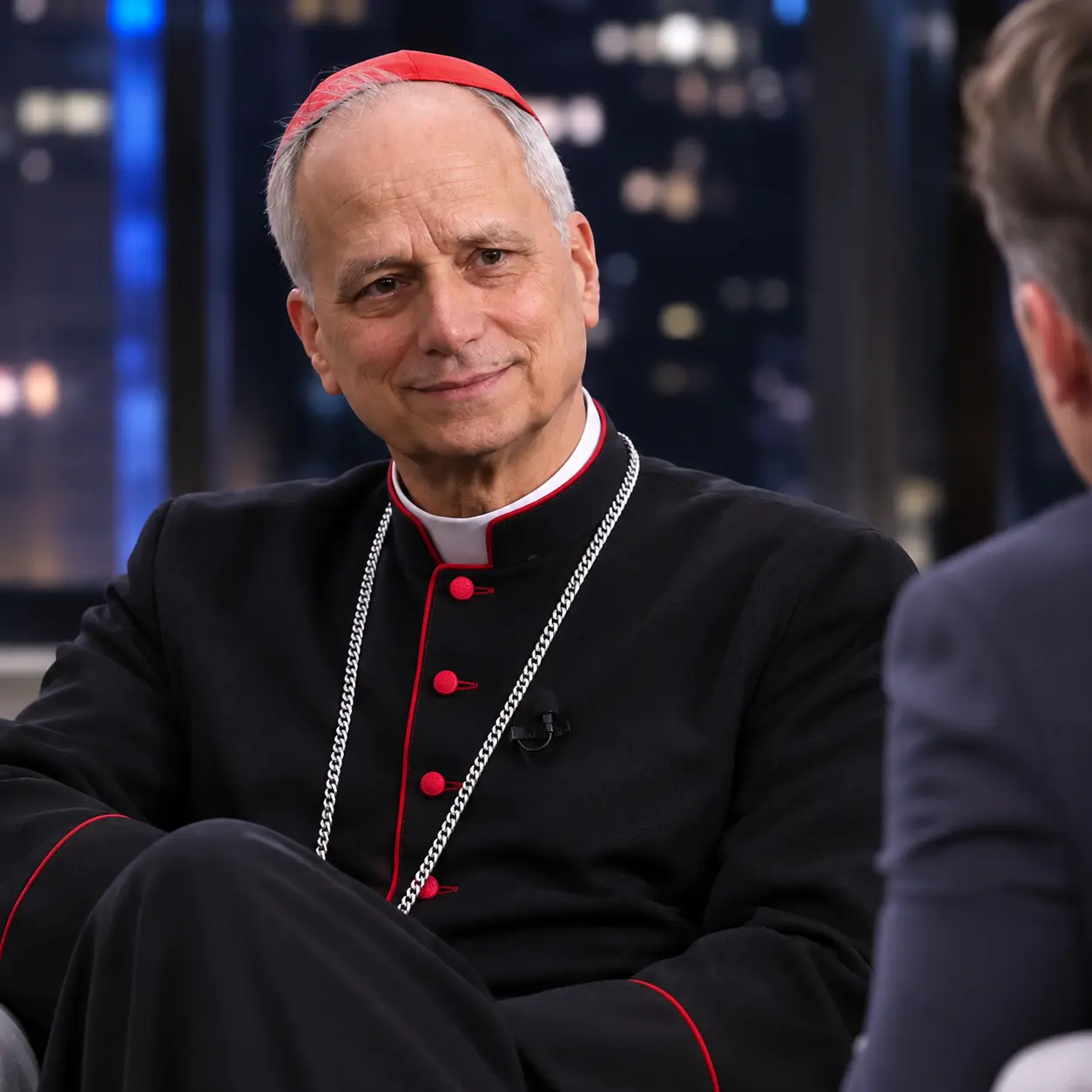
An extraordinary television confrontation allegedly involving Pope Leo XIV has become the subject of a dramatic online narrative, raising questions about the relationship between religious authority and American politics.
According to the circulating account, the Holy Father was supposedly challenged by a television host who accused religious leaders of using the 2026 United States midterm elections to attract public attention.
The exchange allegedly became increasingly tense before the pope stood up and left the interview while cameras continued recording.
If authenticated, such an incident would represent an unusual moment in modern papal communication.
However, the supplied narrative identifies no television network, presenter, broadcast recording, or official Vatican confirmation establishing that the confrontation occurred.
The alleged walkout therefore remains unverified.
Nevertheless, the underlying controversy raises important questions about the role religious leaders play in political discussions.
Pope Leo XIV occupies a position unlike that of an ordinary political commentator.
As the leader of the Roman Catholic Church, he serves a worldwide religious community whose members live under different political systems and hold diverse views.
His responsibilities extend beyond the domestic political debates of any single country.
Yet the Church's moral teachings frequently intersect with public policy.
Questions involving poverty, immigration, human dignity, economic justice, and international peace often become subjects of political disagreement.
This intersection can create tension between religious institutions and political commentators.
Born Robert Francis Prevost on September 14, 1955, in Chicago, Illinois, Pope Leo XIV became the first pontiff born in the United States when he was elected on May 8, 2025.
His American background gives his leadership particular historical significance.
However, his religious identity was also shaped by decades of service in Peru.
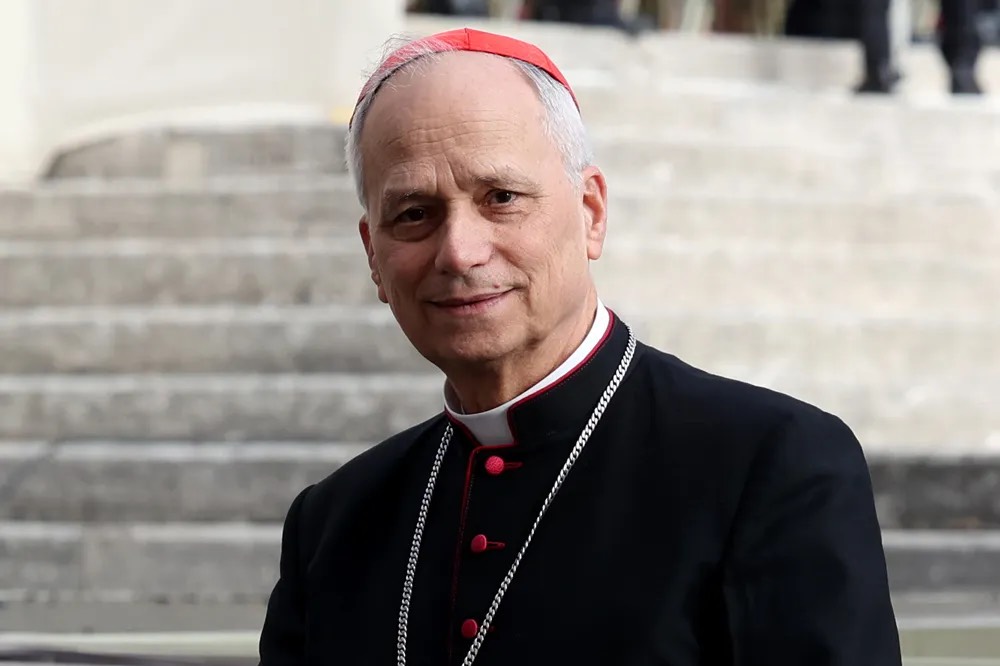
As a member of the Order of Saint Augustine, he developed a spiritual outlook emphasizing humility, community, and the pursuit of truth.
His years in Latin America brought him into contact with families facing poverty, social uncertainty, and limited economic opportunities.
These experiences influenced his understanding of pastoral responsibility.
For him, religious leadership involves recognizing the needs of vulnerable people and encouraging practical expressions of compassion.
Such concerns are not limited to one political party or electoral cycle.
They are rooted in longstanding Catholic teachings about the dignity of every human person.
The 2026 United States midterm elections provide an important context for discussing the relationship between religion and politics.
Midterm elections determine representation in Congress and influence the direction of national policy.
They also generate intense debate about economic conditions, immigration, healthcare, and the responsibilities of government.
Religious organizations and individual believers may have strong opinions about these subjects.
However, the Catholic Church's mission is not identical to the objectives of a political campaign.
Its teachings address moral principles that may have implications for public life without requiring allegiance to a particular political party.
This distinction is essential.
Religious leaders can discuss human dignity, peace, and social responsibility while maintaining independence from partisan electoral strategies.
Their public statements may challenge policies supported by different political groups.
That does not automatically mean they are attempting to influence an election for personal attention.
Likewise, public criticism of religious leaders does not necessarily constitute hostility toward religion.
In democratic societies, questions about the relationship between faith and political influence are legitimate subjects for discussion.
The challenge is to conduct those discussions with accuracy and mutual respect.
The alleged television confrontation highlights how easily disagreements can become personalized.
A presenter might question whether religious institutions should comment on political matters.
A religious leader might respond by explaining the moral responsibilities associated with faith.
Such an exchange could produce meaningful discussion if both participants addressed the substance of the disagreement.
However, when conversations become focused on accusations and emotional reactions, the underlying issues can disappear.
This is particularly true in television environments where dramatic moments often attract greater attention than careful explanations.
A confrontation may be reduced to a short clip.
A statement may be removed from its original context.
And a participant's expression may be interpreted as evidence of anger or embarrassment without sufficient information.
The circulating story about Pope Leo XIV demonstrates the importance of verification.
Without an authenticated recording, it is impossible to establish what the supposed host said or how the pope allegedly responded.
There is also no reliable basis for describing the Holy Father's emotional state.
The claim that he walked out of an interview requires independent confirmation.
Until such evidence exists, the incident should not be presented as fact.
Beyond the alleged confrontation, the broader relationship between Catholic teaching and public affairs deserves attention.
The Church has a long history of addressing social questions.
In 1891, Pope Leo XIII published Rerum Novarum, an influential encyclical concerning labor, economic conditions, and the rights and responsibilities of workers.
The document became an important foundation of modern Catholic social teaching.
It emphasized the dignity of labor and the need to consider the well-being of individuals within economic systems.
Pope Leo XIV's chosen name evokes this historical legacy.
The connection encourages reflection on the responsibilities of religious leadership in societies facing technological, economic, and social change.
Catholic social teaching includes principles such as solidarity, subsidiarity, the common good, and respect for human dignity.
These ideas can inform discussions about public policy.
However, they do not automatically produce a single political position on every issue.
Catholics may disagree about the most effective ways to apply moral principles through legislation.
Such disagreements can occur within families, parishes, and broader communities.
The Church's responsibility includes encouraging informed moral reflection rather than reducing complex questions to partisan slogans.
For Pope Leo XIV, the importance of dialogue is closely connected to his Augustinian formation.
Saint Augustine's spiritual legacy emphasizes the search for truth and the importance of community.
It encourages individuals to approach difficult questions with humility.
This does not require abandoning deeply held convictions.
Instead, it means recognizing that disagreement should not eliminate respect for others.
In contemporary political environments, that principle is particularly valuable.
Public debate often rewards confrontation.
Social media platforms amplify emotional reactions.
And political disagreements can quickly become personal attacks.
Religious leaders face the challenge of communicating moral concerns without allowing their messages to be absorbed entirely into partisan conflict.
For a pope, that challenge is international.
Catholics live in countries with different political institutions, economic circumstances, and cultural traditions.
A message delivered in Vatican City may be interpreted differently in Washington, Buenos Aires, Manila, or Nairobi.
The universal character of the Church requires attention to these differences.
It also places particular importance on careful language.
Statements concerning migration, poverty, conflict, or economic inequality may carry political implications.
But their religious significance extends beyond electoral calculations.
For example, concern for migrants may arise from Catholic teaching about human dignity and the responsibilities of communities toward vulnerable people.
Similarly, discussions about poverty may reflect longstanding commitments to social justice.
These principles deserve evaluation on their merits.
They should not automatically be dismissed as attempts to attract attention.
At the same time, religious institutions must remain accountable for the accuracy and clarity of their public communication.
Moral authority does not eliminate the need for thoughtful explanation.
Questions from journalists can provide opportunities to clarify positions and address misunderstandings.
Respectful interviews may help audiences better understand the relationship between faith and contemporary issues.
However, no such interview involving the alleged confrontation has been authenticated in the supplied account.
The story also raises questions about the ethics of political reporting.
A sensational headline may attract readers by suggesting that a prominent figure lost control during a public exchange.
But without reliable evidence, such descriptions risk creating false impressions.
Responsible journalism requires identifiable sources, accurate quotations, and appropriate context.
These standards are especially important when reporting on individuals whose statements may influence international audiences.
For Catholics following Pope Leo XIV, the most constructive response is to seek verified information.
The Holy See Press Office and Vatican News provide important sources for official papal statements and activities.
Authenticated broadcast recordings and credible reporting would also be necessary to establish the details of any alleged television confrontation.
Without such evidence, speculation should not be mistaken for confirmation.
The broader questions about faith and political responsibility remain meaningful regardless of the story's authenticity.
Religious leaders have opportunities to encourage dialogue, defend human dignity, and call attention to humanitarian concerns.
Political leaders have responsibilities to develop policies and remain accountable to the public.
Journalists have a duty to ask difficult questions while accurately representing the answers they receive.
These responsibilities can coexist within a healthy public discussion.
They do not require every disagreement to become a dramatic confrontation.
As the United States continues navigating political debates surrounding the 2026 midterm elections, questions about the role of religion in public life will remain relevant.
Pope Leo XIV's American origins may attract particular attention, but his responsibilities as pontiff extend far beyond the United States.
His ministry is rooted in the spiritual traditions of the Catholic Church and informed by decades of pastoral experience.
Ultimately, the alleged television walkout remains an unverified story.
There is no substantiated basis in the supplied account for claiming that Pope Leo XIV confronted a host or abandoned an interview.
What remains important is the broader principle that public disagreements should be approached with truthfulness, patience, and respect.
For religious leaders, political commentators, and ordinary citizens alike, meaningful dialogue requires more than dramatic accusations.
It requires listening carefully, examining evidence, and recognizing the dignity of those who hold different views.
And in a world increasingly shaped by confrontation, that commitment may be more valuable than any viral television moment.